In 2026, "familiar with AI" on a resume is the new "proficient in Microsoft Word." It tells a recruiter you've seen the tool, not that you can use it. These three certifications give them something they can actually verify. All three are free or near-free. All three are issued by names hiring managers already trust.
Here's where to find each one, what you actually learn, and the honest catch.
1. Google AI Professional Certificate
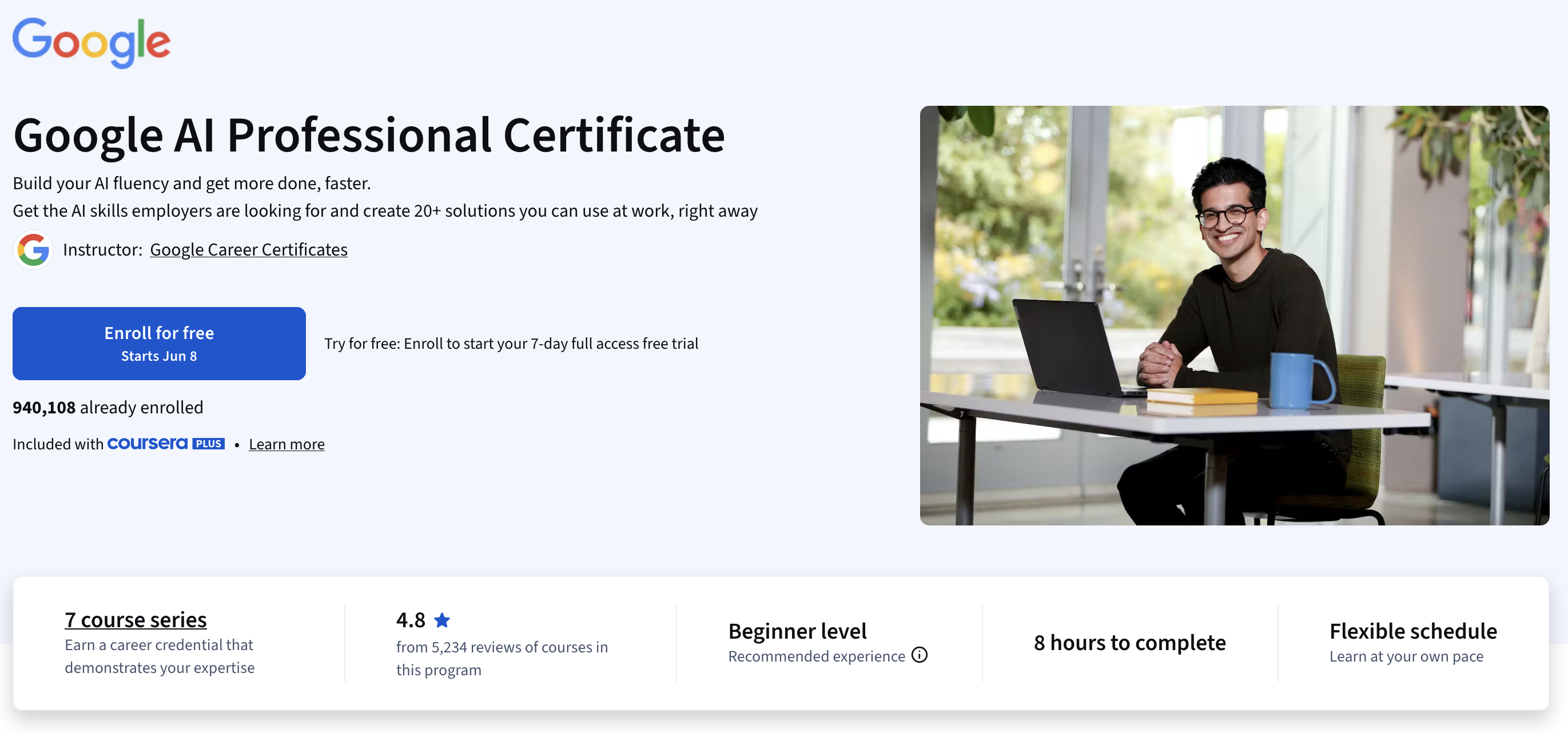
Google's 7-course beginner series, hosted on Coursera. Around 8 hours total. Covers practical AI fluency: written communication with AI, content creation, prompt design, and basic AI-driven app building. 940,000+ enrolled, 4.8 stars from 5,000+ reviews.
Why it matters: the Google name on a resume signals "I learned this from the people building it." The content itself is beginner level. The credential punches above the content.
Enroll: coursera.org/google-certificates/google-ai
2. GitHub Foundation Certification
GitHub's official entry-level cert. Free for students through the GitHub Student Developer Pack. Tests the fundamentals: commits, branches, pull requests, merges, and how teams actually use Git in practice.
Why it matters: nearly every dev role uses GitHub. This cert proves you understand Git as a workflow, not just git clone. It's the single most universally recognised entry-level cert in tech.
Apply: education.github.com/experiences/foundations_certificate
3. Claude Certified Architect Exam
Anthropic's own certification for building production-grade applications with Claude. Application-based: you request access, get approved, then sit the Foundations exam. Covers the technical skills modern AI teams actually need: agentic architecture, MCP integration, and context management.
Why it matters: every team currently shipping with Claude is starting to filter for this. If the company you're applying to uses Claude (and an increasing number do), this cert puts you ahead of every candidate who lists "ChatGPT" under skills.
Request access: anthropic.skilljar.com
The honest catch
Certs open doors. They don't close deals. Hiring managers use them to filter the "no" pile from the "maybe" pile. What lands the offer is the work behind them: projects, shipped code, things you can show in a 5-minute screen share.
Best move: pick all three this weekend. Use the spare hours to also ship one small project that uses the skills they cover. Credential plus proof is what gets the callback.